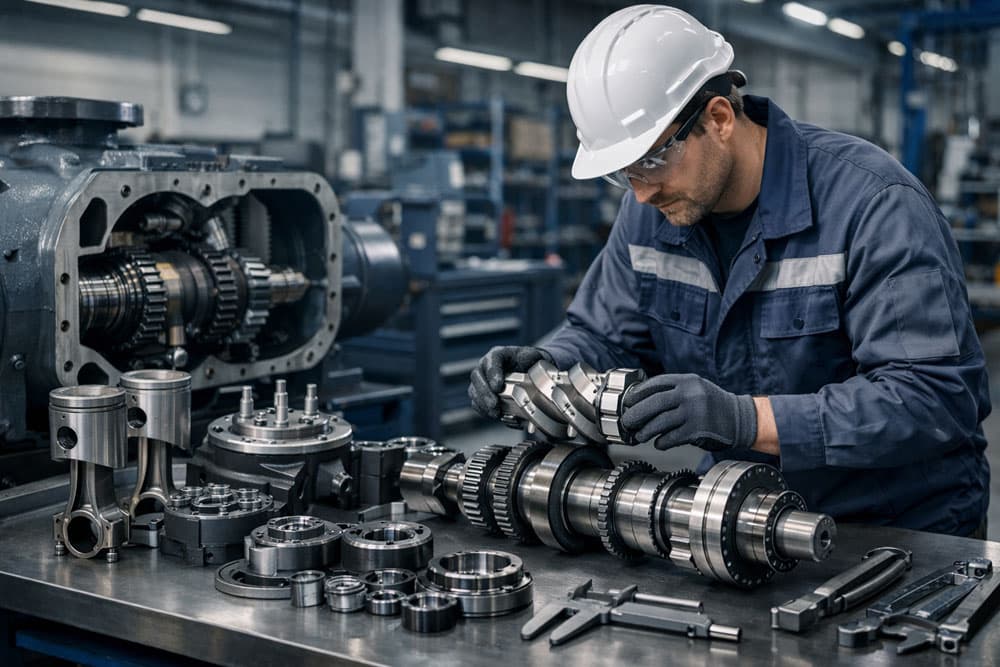
Industrial compressors are a vital component across multiple industries, from manufacturing to oil and gas. Over time, these machines experience wear and tear, making compressor overhauling an essential maintenance procedure. This process ensures the compressors operate at peak efficiency and supports long-term reliability.
A well-executed overhaul can significantly enhance operational performance, reduce unexpected downtimes, and ensure safety compliance. This detailed guide will walk through the step-by-step process of compressor overhauling, equipping professionals with the knowledge to manage this crucial maintenance activity effectively.
Compressor Overhauling: An Overview
Compressor overhauling is a detailed and methodical process designed to restore a machine to its optimal operating performance. This process includes thorough cleaning, inspection, and repair or replacement of worn or damaged components to ensure reliability and efficiency. Overhauling is often prompted by performance declines, scheduled maintenance intervals, or after certain operational thresholds have been met. This practice helps extend compressor service life while improving operational efficiency and output stability.
Understanding the different types of compressors, such as reciprocating, rotary screw, and centrifugal compressors, is crucial because each type demands specific attention during the overhauling process. For example, rotary screw compressors might require a different disassembly approach than those of reciprocating compressors. Furthermore, adherence to manufacturer recommendations and industry standards is paramount to ensure the process is executed correctly.
Essential Pre-Overhaul Preparations
Before beginning the compressor overhauling process, thorough preparation is crucial to minimize operational disruptions. This includes gathering necessary tools, consulting manufacturer guidelines, and ensuring personnel are trained to handle the specific compressor model.
Another critical step in pre-overhaul preparations is the verification of the compressor maintenance history. This documentation provides visibility into previous issues and repairs, providing insights into potential problem areas that might require extra attention. It is also essential to schedule the overhaul during periods of low operational demand to minimize the impact on production.
Comprehensive Inspection Before Disassembly
Conducting a comprehensive inspection before disassembly is critical to identify potential issues and avoid unnecessary repairs. An effective inspection involves evaluating operational parameters, physical condition, and performance metrics to pinpoint anomalies. This step establishes a baseline for assessing the current condition of the compressor.
The inspection checklist might include analyzing vibration levels, checking for oil leaks, and assessing the performance of safety valves. Technicians should listen for unusual noises and take detailed notes of any irregularities that could indicate deeper mechanical issues. This diagnostic phase is crucial for effectively planning the subsequent steps of the overhaul.
Systematic Disassembly Process
Systematic disassembly is a vital stage in compressor overhauling, ensuring parts are removed meticulously and can be reassembled correctly. This phase begins by safely shutting down and depressurizing the compressor to prevent accidents. Utilizing proper tools and maintaining a clean workspace are critical for an efficient compressor overhauling process.
The disassembly should follow a logical sequence, starting with the removal of external components, such as guards and covers, followed by internal elements like pistons, casings, and rotors. During compressor overhauling, each part should be carefully tagged and documented to facilitate easier reassembly. Bolts and fasteners must be stored in an organized manner to prevent misplacement.
Thorough Cleaning and Examination of Parts
Once disassembled, each compressor component must undergo thorough cleaning and examination. This is essential to remove dirt, oil residues, and other contaminants that may affect performance. Cleaning ensures a clear view for inspecting parts for wear, corrosion, or structural damage.
Tools like ultrasonic cleaners or chemical solutions might be employed for detailed cleaning. During the examination, technicians should look for common issues such as pitting on surfaces or distortion in rotors. Components like filters and gaskets require special attention since they are pivotal in maintaining compressor efficiency.
Necessary Repairs or Replacements
Issues identified during the inspection and cleaning phases determine the required repairs or replacements. Worn-out parts must be either repaired or replaced, depending on their condition and the feasibility of repair. The use of OEM parts is essential to maintain manufacturer standards, ensure proper fitment, and avoid performance deviations.
Common replacements usually include gaskets, seals, valves, and bearings. The decision between repair and replacement depends on factors such as cost-effectiveness, downtime implications, and the remaining service life of the parts.
- Gaskets: Must prevent leaks and handle high-pressure conditions, demanding precise fitting.
- Bearings: Ensure smooth rotational movement, necessitating checking for excessive wear or heat damage.
Reassembly: Tips and Techniques
Reassembly marks the culmination of the compressor overhauling process, where meticulous care is crucial to ensure everything aligns and functions correctly. Technicians should carefully follow the reverse order of disassembly, referencing documentation and notes taken during disassembly.
Specified torque values must be strictly followed during compressor overhauling to prevent mechanical failures. Proper lubrication of moving parts is essential to ensure optimal performance upon restart. Performing a dry run without a load after reassembly helps identify any misalignments or functional issues before the compressor is returned to full operation.
Testing and Calibration Post-Overhaul
Once reassembly is completed, testing and calibration become essential to certify that the compressor operates as expected. This involves operating the compressor under simulated load conditions and recalibrating components such as pressure switches and safety devices.
Detailed data from pre-overhaul inspections are compared against the post-overhaul performance to ensure that enhancements and repairs have been effective. These tests validate the success of the overhaul and confirm restoration to specified performance parameters. Efficiency checks and vibration analysis are often conducted to ensure long-term reliability.
Conclusion
The compressor overhauling process is complex but essential for maintaining the reliability and efficiency of industrial compressors. By following a rigorous and systematic approach to disassembly, cleaning, inspection, repair, and reassembly, technicians can ensure the seamless operation of compressors. Each step, from thorough inspection to testing after reassembly, plays a critical role in achieving optimal performance and extending the equipment’s service life.
Industrial operators should prioritize regular overhauling as part of their maintenance strategy, adhering to manufacturer guidelines and industry best practices. This not only safeguards the investment in expensive machinery but also minimizes operational disruptions, enhancing overall productivity.